About Trace & Address
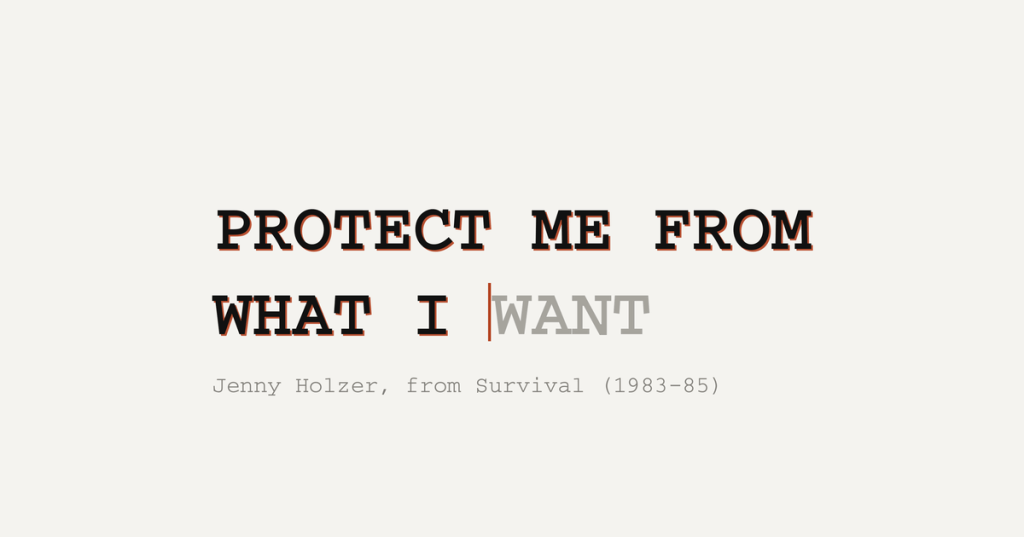
On what becomes of writing and relation when machines are built to address us.
Trace & Address begins from a premise: generative AI is not only a technical object but a problem of reading. These systems encounter us through language, read the traces we leave behind, and write them back to us as accounts of who we are, what we want, and who we might become.
The essays and dispatches collected here read artificial intelligence through Indigenous studies, literary studies, and new media, and through the colonial histories of infrastructure and extraction those systems extend. They ask what becomes visible when the humanities take these systems seriously as cultural and material forms: how they reorganize writing and interpretation, how they make persons legible to machines, and how intimacy at the interface depends on infrastructures of data, labour, energy, and accumulation. Behind each of these is a further question: what forms of relation, refusal, and responsibility do such arrangements demand?
The title names two concerns that run through this work. A trace is a mark through which something becomes available for interpretation without ever being fully present: a person, relation, or event encountered through what it leaves behind. Address is language turned toward another. It produces a relation whether or not that other is present, stable, or known, and it helps shape who the addressee becomes.
Generative AI makes the traffic between these terms unusually literal. It gathers traces in order to address us, and its address produces further traces. What is at stake is not only what these systems say, but who we are made into by being spoken to in this way, and whose traces had to be taken to make that speech possible.
ABOUT THE EDITOR ──
David Gaertner
David Gaertner is a settler scholar and Associate Professor in the Institute for Critical Indigenous Studies at the University of British Columbia, and an Associate Member of the Department of English Language and Literatures. Trained as a literary scholar and grounded in Indigenous studies, he researches and teaches new media, digital storytelling, and generative AI, with attention to the relationships among story, technology, power, and the systems through which subjects become legible and governable. He is co-founder of CEDaR, a community-led new media and digital storytelling lab at UBC, and associate editor and new media curator for BC Studies.
He is the author of The Theatre of Regret: Art, Literature, and the Politics of Reconciliation in Canada (UBC Press, 2020), editor of Sôhkêyihta: The Poetry of Sky Dancer Louise Bernice Halfe, and co-editor of Read, Listen, Tell: Indigenous Literature from Turtle Island and the forthcoming Indigenous X (all Wilfrid Laurier University Press), as well as Relational Technologies, a special issue of BC Studies. His essay on #HonouringIndigenousWriters received the 2026 Beatrice Medicine Award for Scholarship in American Indian Studies. His current work examines generative AI, extraction, and the politics of computational interpretation.

